Coming November 2026 from University of Georgia Press (Sociology of Race & Ethnicity series):
PREORDER NOW: https://www.ugapress.org/9780820377834/storefront/
Use code 08FRONT for 30% off list price
An ethnographic study of commercial gentrification and the racialization of space in two Chicago neighborhoods
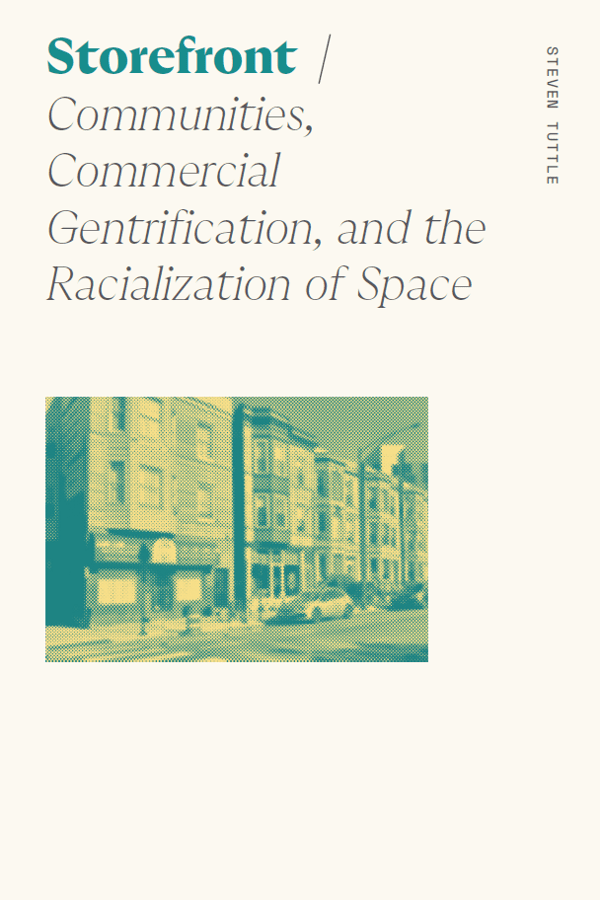
Based on an ethnographic study of the role and experiences of local businesses, institutions, and community-level actors in Logan Square and Pilsen, two longtime ethnic enclaves experiencing and resisting gentrification in Chicago, Storefront examines local businesses’ contributions to communities, how businesses might promote or protest gentrification, and how streetscape transformations can threaten community members’ sense of belonging in place. Steven Tuttle untangles issues of community and conflict, segregation and integration, alienation and place attachment, and small business social responsibility from the vantage point of local businesses themselves. In addition to insights about community development, local institutions, and social capital common in qualitative neighborhood studies and gentrification scholarship, Storefront also features a unique focus on local businesses and the racialization of space.
Advance praise
Storefront carves new terrain in the study of residential segregation. Tuttle spent three years doing ethnographic work in neighborhoods populated mostly by Latinos in Chicago to examine how commercial gentrification leads to these neighborhoods becoming white. He powerfully shows how these neighborhoods can look integrated at the beginning of the process when in truth they experience ‘integrated segregation’ that will inexorably lead to the whitening of the neighborhoods. This is a book I will definitely assign in my courses! ~Eduardo Bonilla-Silva, James B. Duke Distinguished Professor of Sociology, Duke University
After decades of gentrification research, we finally get a book devoted solely to the importance of local businesses for understanding the process. Tuttle’s novel work offers a new lens for looking at how different racial and ethnic groups use shops to make place and stake claims in changing urban communities. ~Richard E. Ocejo, author of Sixty Miles Upriver: Gentrification and Race in a Small American City
While residential gentrification has received significant attention, far less has focused on commercial gentrification. Tuttle tackles this gap in Storefront with his cutting-edge examination on how the intersections between commercial gentrification, the racialization of space, and the reshaping actions of local businesses exacerbate economic and social inequalities, while at the same time, redefining who belongs in the community. ~Deirdre Oakley, coeditor of The Performative City: An Approach to the Study of Urban Policy

